Erasmus+ Project Advancing Higher Education through Digital Innovation and Smart Technologies (AHEDIS) Presented at the University of Sarajevo – Faculty of Pharmacy
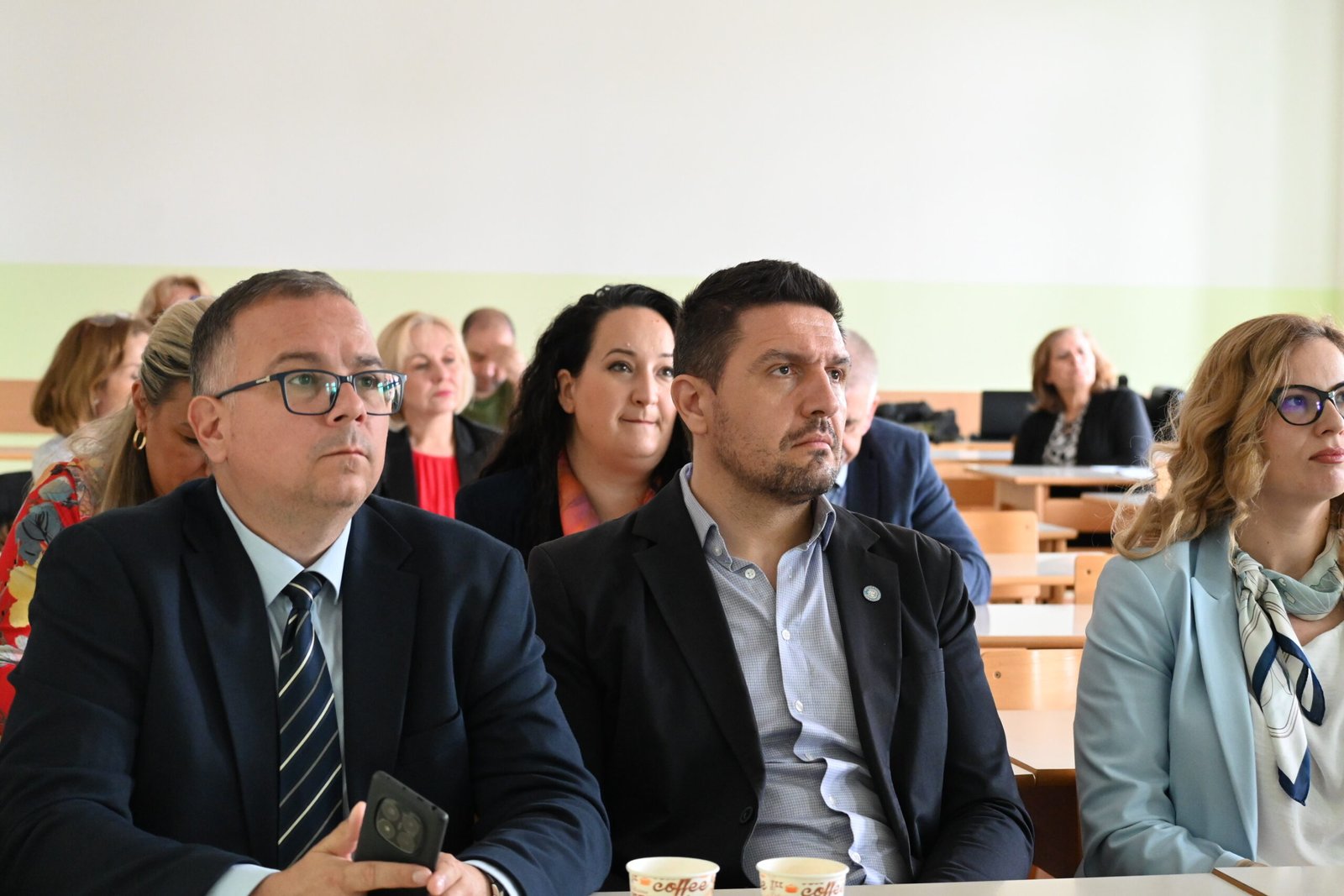
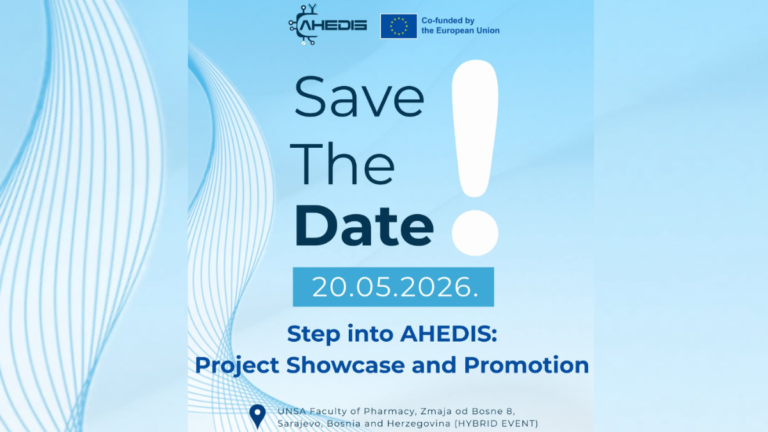
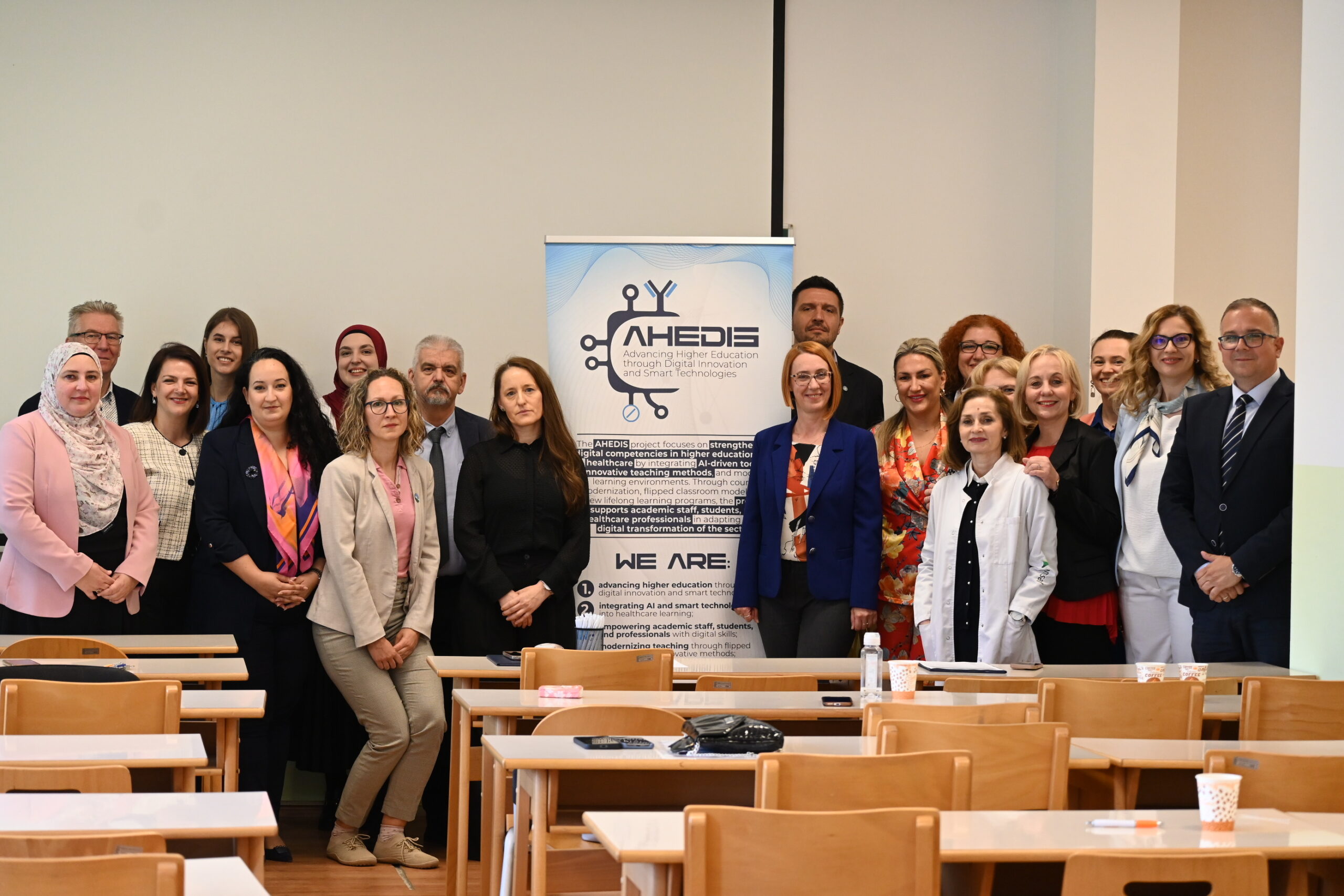
The presentation and promotion event of the project Advancing Higher Education through Digital Innovation and Smart Technologies (AHEDIS), titled “Step into AHEDIS: Project Showcase and Promotion”, was held on 20 May 2026 at the University of Sarajevo – Faculty of Pharmacy. The event brought together members of the academic community, researchers, students, representatives of public institutions and ministries, as well as experts in the fields of digital health, artificial intelligence, and modern educational technologies, with the aim of presenting the project results and exchanging experiences related to the digital transformation of higher education. The event was moderated by Assist. Prof. Belma Pehlivanović Kelle, PhD.
The event opened with a presentation entitled “Introducing AHEDIS: Project Overview and Key Objectives”, delivered by the project coordinator, Prof. Alisa Elezović, PhD (University of Sarajevo). During the presentation, the AHEDIS project was introduced with a special focus on its key objectives, expected outcomes, and strategic development directions. The importance of improving digital competencies in healthcare education, as well as strengthening cooperation between the academic and healthcare sectors, was emphasized.
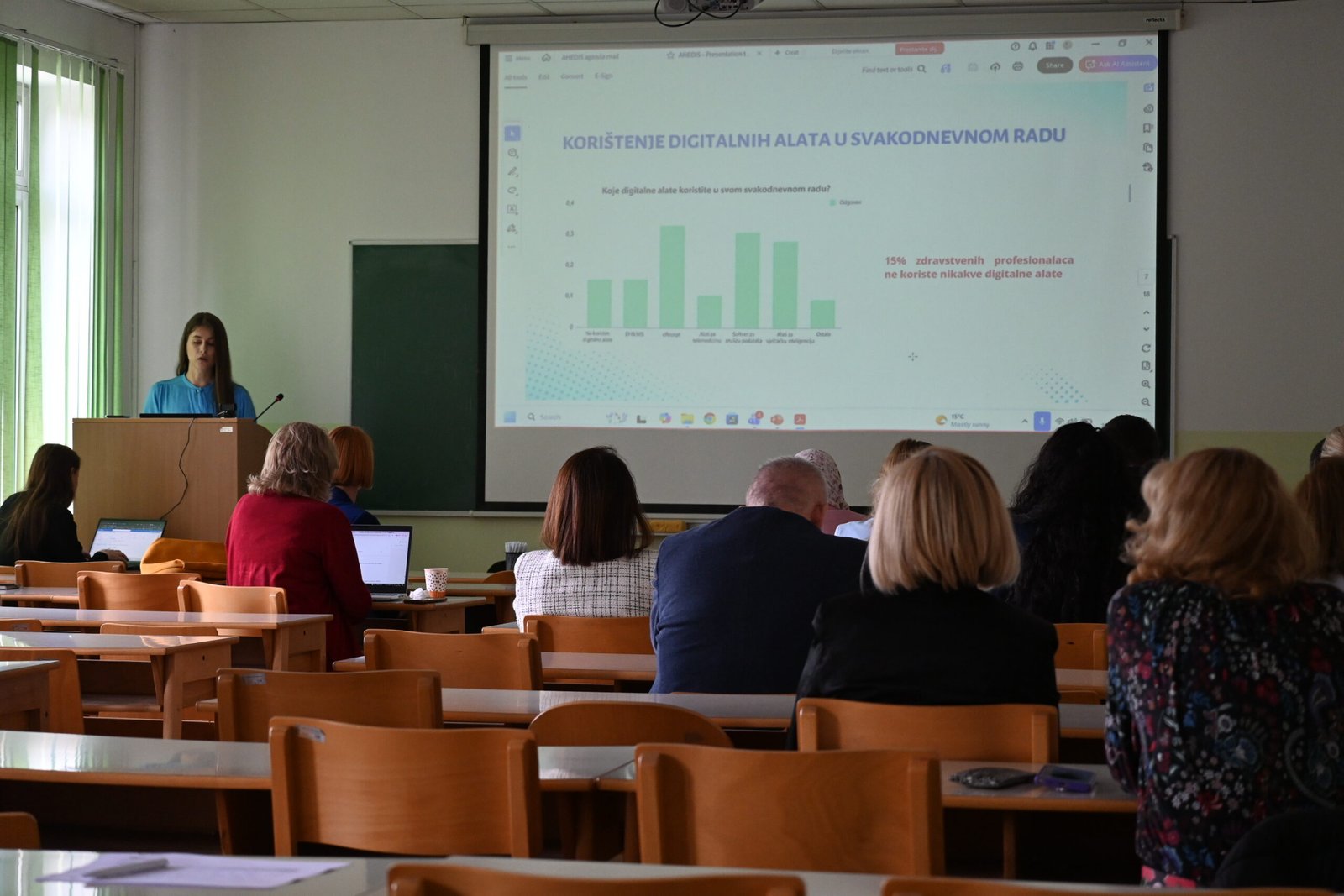
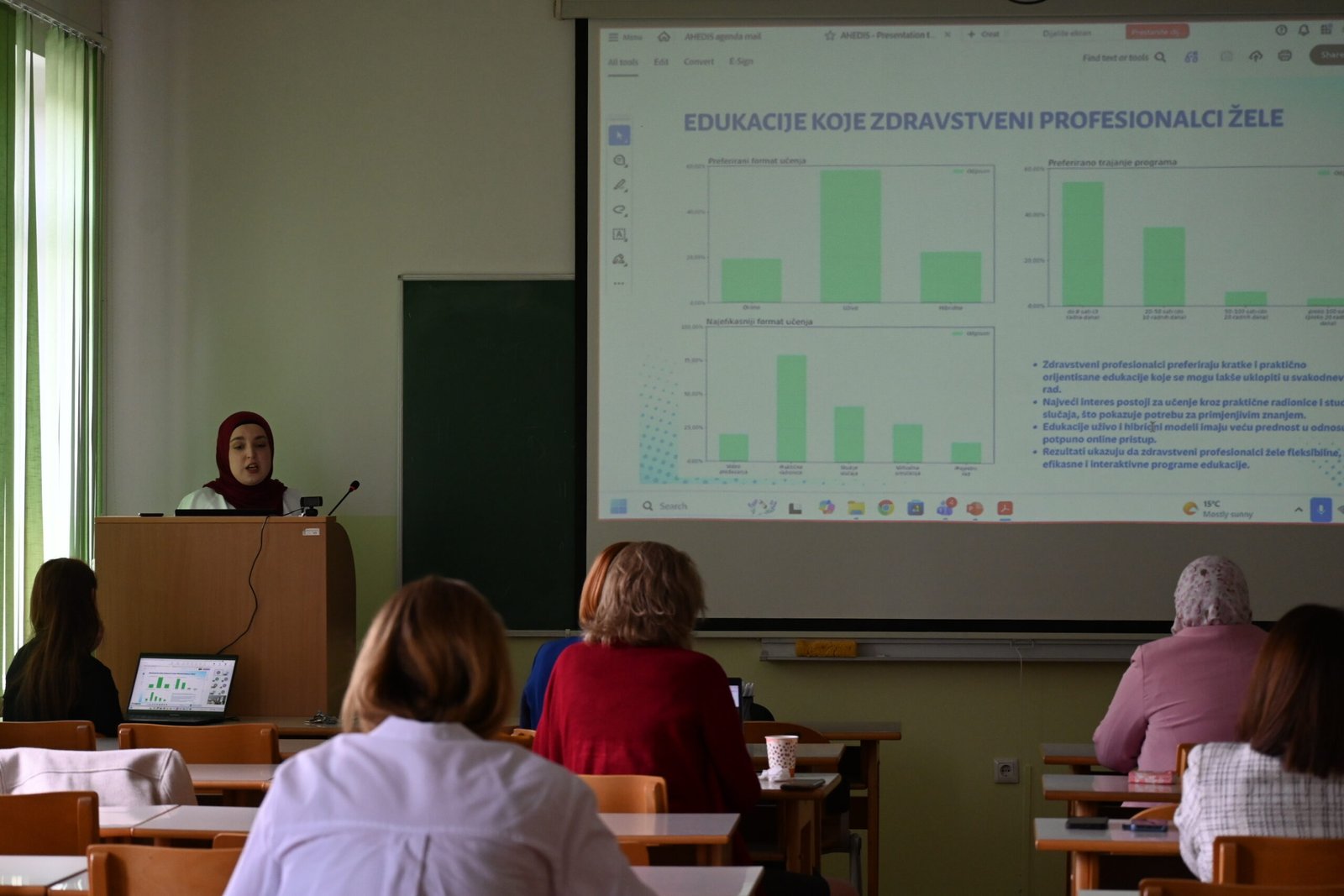
Prof. Elma Omeragić, PhD (University of Sarajevo), together with Madžida Hundur Hiyari and Nejra Merdović (Verlab Institute), presented the results of the needs analysis conducted within the project framework, focusing on the identification of challenges and needs in the digitalization of healthcare education and the development of modern teaching competencies.
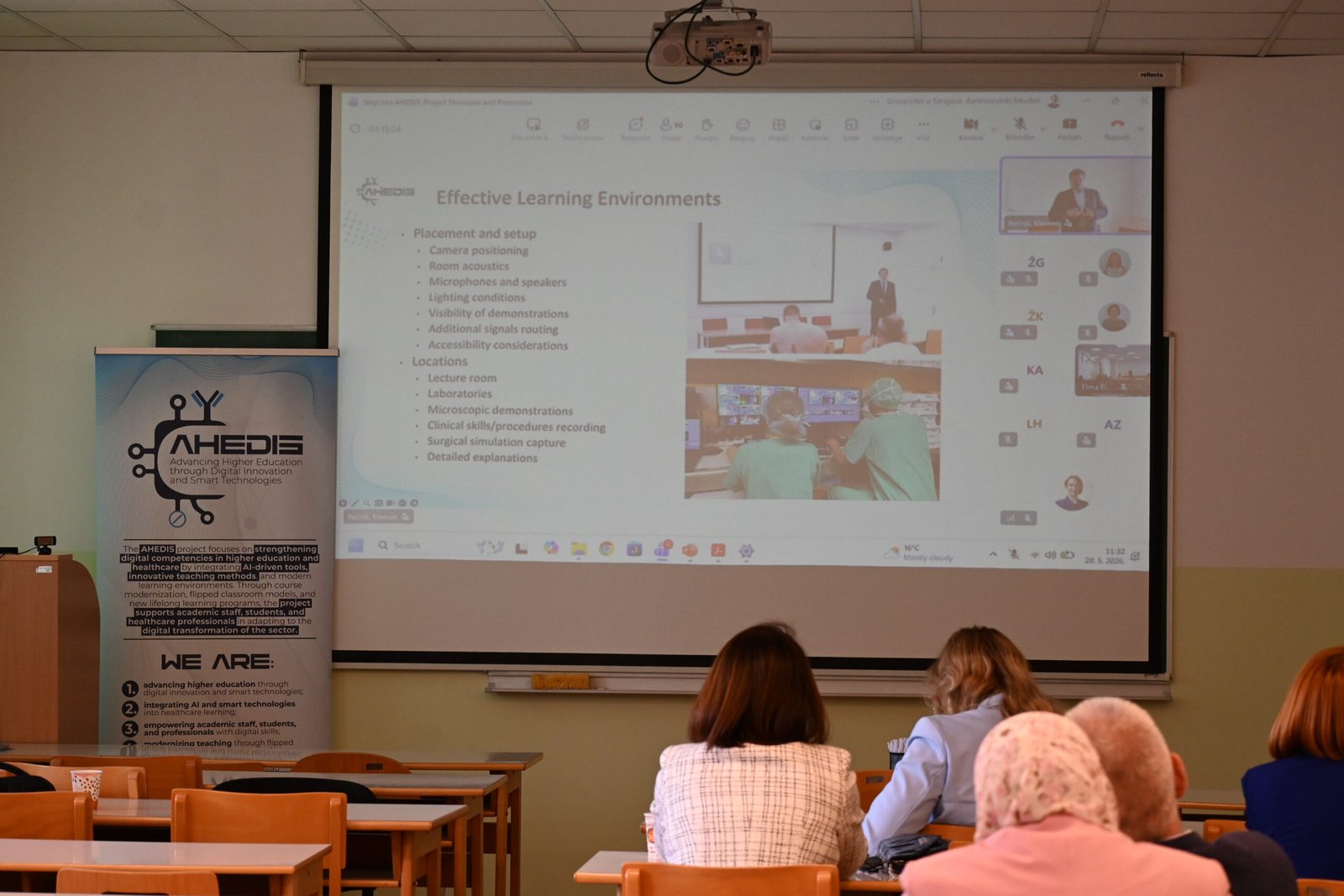
Prof. Ralf Seepold, PhD (HTWG Konstanz – University of Applied Sciences), delivered a lecture entitled “Artificial Intelligence in Healthcare: How to Harness Its Potential and Respond to Challenges – From Fundamentals to Biomedical Applications”, focusing on the growing role of telemedicine and artificial intelligence in modern healthcare systems. Klemen Pečnik (University of Ljubljana) presented the application of audiovisual technologies and extended reality (XR) tools in education, introducing participants to innovative approaches for creating interactive and dynamic learning environments through virtual content, multimedia, and immersive technologies.
The closing lecture, entitled “Innovative AI-Supported Pedagogical Approaches in Modern Education – A Good Practice Example”, was delivered by Prof. Mirza Žižak, PhD (University of Zagreb). During the session, the “flipped classroom” model was presented as a contemporary pedagogical approach that encourages active student participation and the development of independent learning. It was highlighted that students can prepare learning materials before class, while classroom time can be dedicated to discussion, practical activities, and collaborative problem-solving.
Throughout the event, special emphasis was placed on advancing digital education, the application of artificial intelligence in academic environments, and strengthening interdisciplinary collaboration between educational and research institutions and professionals from practice.